I had a good chuckle the other day. I get the same laugh nearly every time I walk out with my favorite camera and lens, looking for things that catch my eye. Sitting on a park bench. Watching the comings and goings of park visitors and prairie dogs. The camera resting on my lap.
A woman stood over my shoulder and said, “Gee, you must get great pictures.” I’m thinking, “There is no reason you couldn’t get some great photos too.”
One guy observes, “That’s a big lens you’ve got there.” Sigh. Like I haven’t heard that a million times before. Guys always seem to be the ones to remark on size. I’m thinking, “Yup, and I know how to use it too.”
But I have to laugh. Otherwise I get annoyed. It’s like slaving over Thanksgiving dinner and having everyone compliment the oven.
It turns out Prairie Dog Town is a great place to people watch. Not dissimilar from observing wildlife jams in Grand Teton. There are so many photography styles on display!
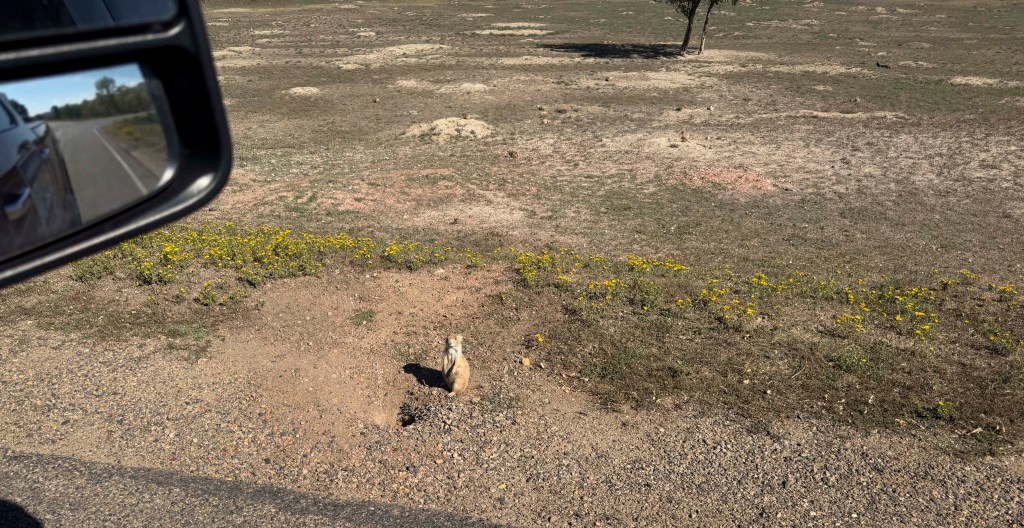
- Folks who pull in sideways to the parking lot, hold the camera out the window for thirty seconds, then drive off.
- Visitors who blow past the 30 open parking spots to jam on the brakes, skidding in the gravel and blocking traffic to grab a few shots.
- The unique (and likely unsuccessful) technique of holding the smart phone, straight out at arms length like a zombie, while marching into the brush, scattering the dogs into their burrows.
- And the classic Shoot-Straight-Ahead method of getting out of the still running car, leaving the door open, zooming to maximum on something straight in front of them. This chap got back in the car without once turning his neck and seeing that there was a curious young prairie dog about ten feet on his left.

I’ve been taking pictures since I was a kid. For a very long time, photography was mostly a way of saying I was there. That is why I recognize this style of photography so well!
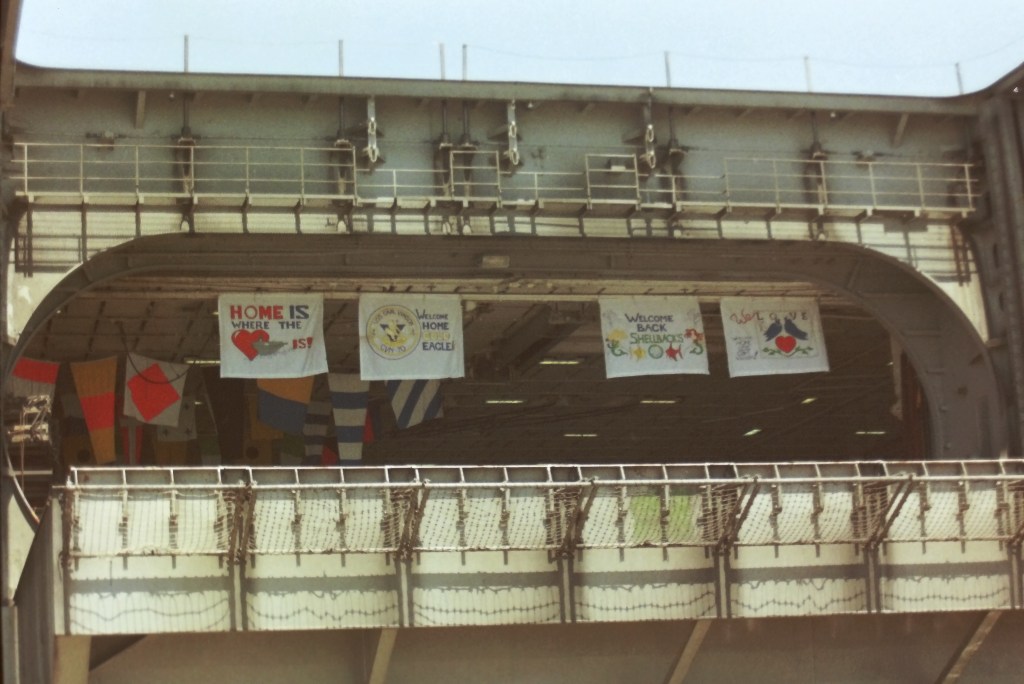
Goodness, the main goal of most of my photography when I got married was trying to share my new life as a Navy Spouse with family back home. Duty stations, deployments, life on base all got the same treatment. The “I was there,” and “I saw this,” photo.
Somewhere along the way, though, that changed. I stopped being quite so interested in proving I’d seen something and became much more interested in seeing what would happen if I stayed put. My goal that afternoon was different. I was there to watch the prairie dogs, and see what they did.
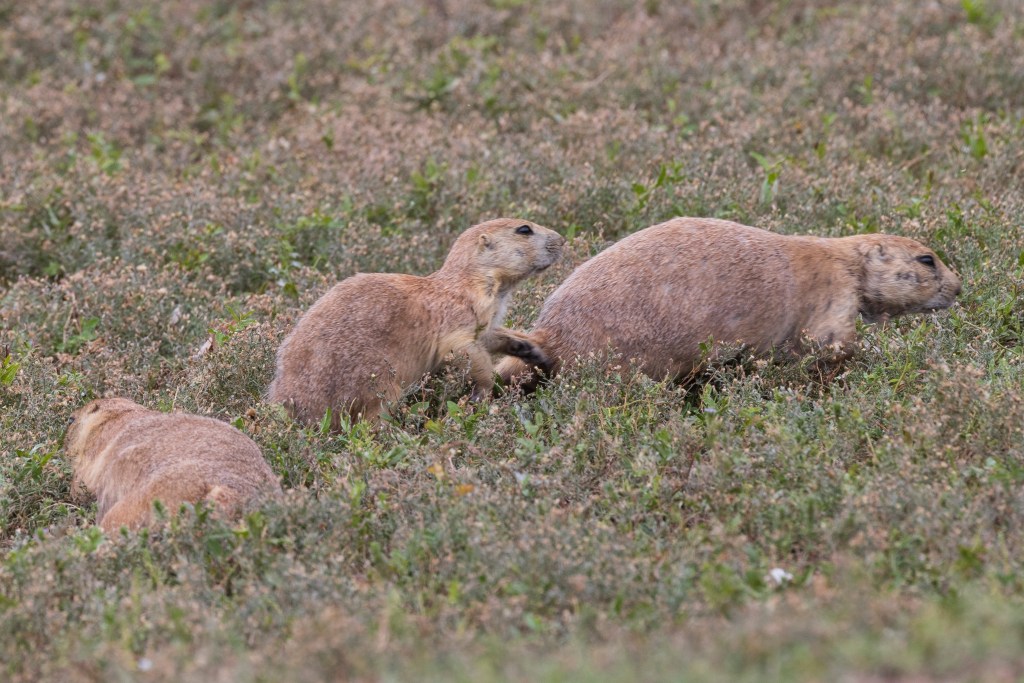
The first thing to hit you is the scale. Acres of sandy mounds, covering both flat and hilly terrain. Flickers of motion played at the edges of your peripheral vision. Then your eye starts resolving the general motion into individual creatures, doing things.


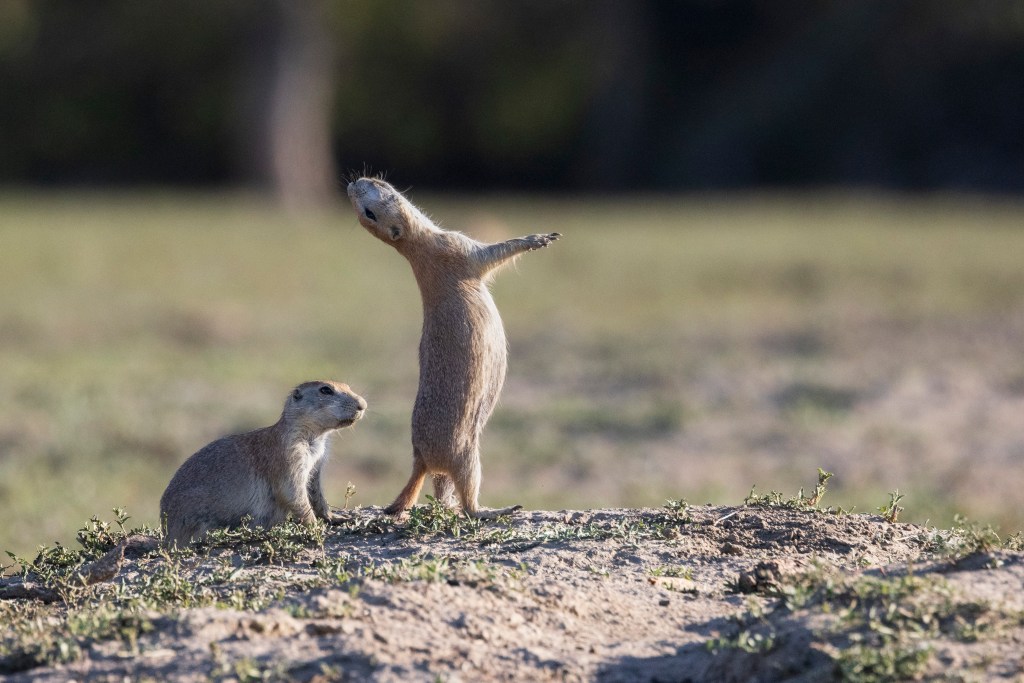
Looking across the field you could spot the sentries, standing tall on top of a burrow, occasionally calling out to their neighbors.


Every once in a while one dog’s “Yip!” set off a wave of others leaping up to add their voice — like fans in a sport stadium performing the wave.
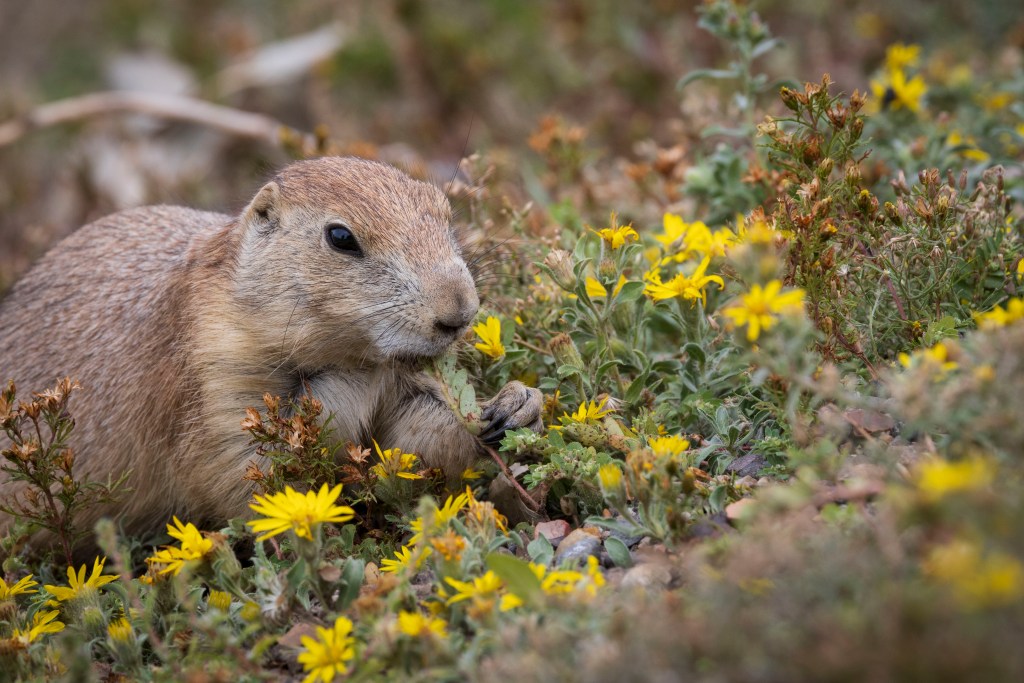
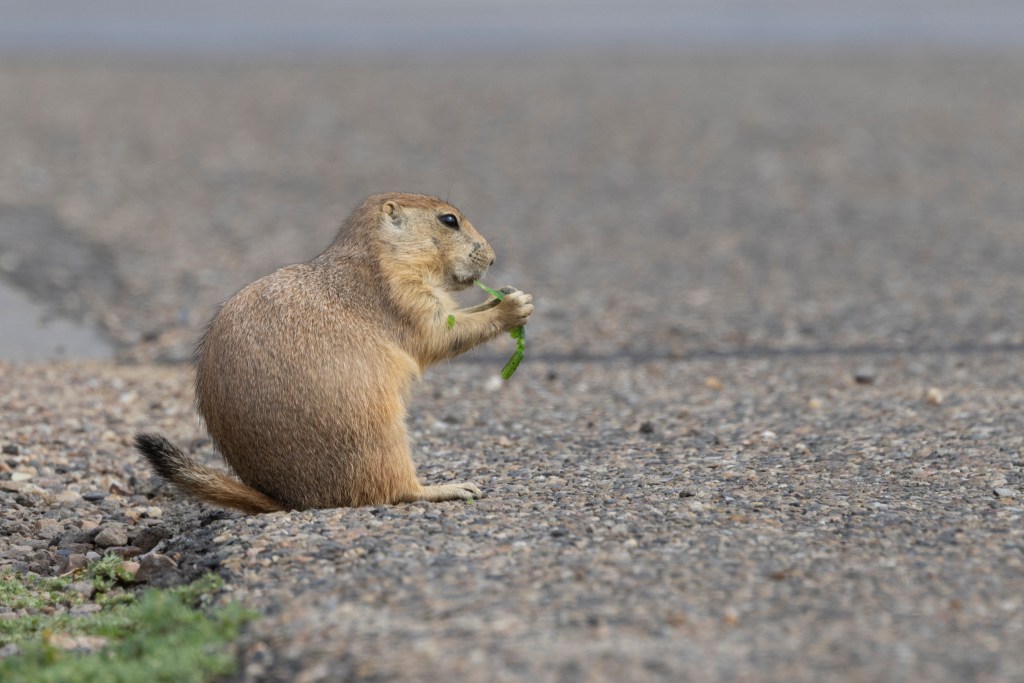
Others were head down, foraging in the low-growing plants.



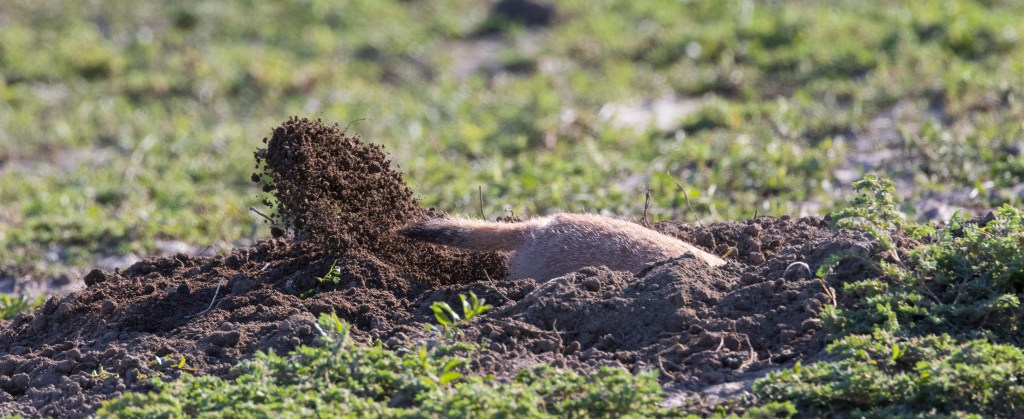
Some prairie dogs were busy with burrow maintenance, or adding to the entrances for their complex.
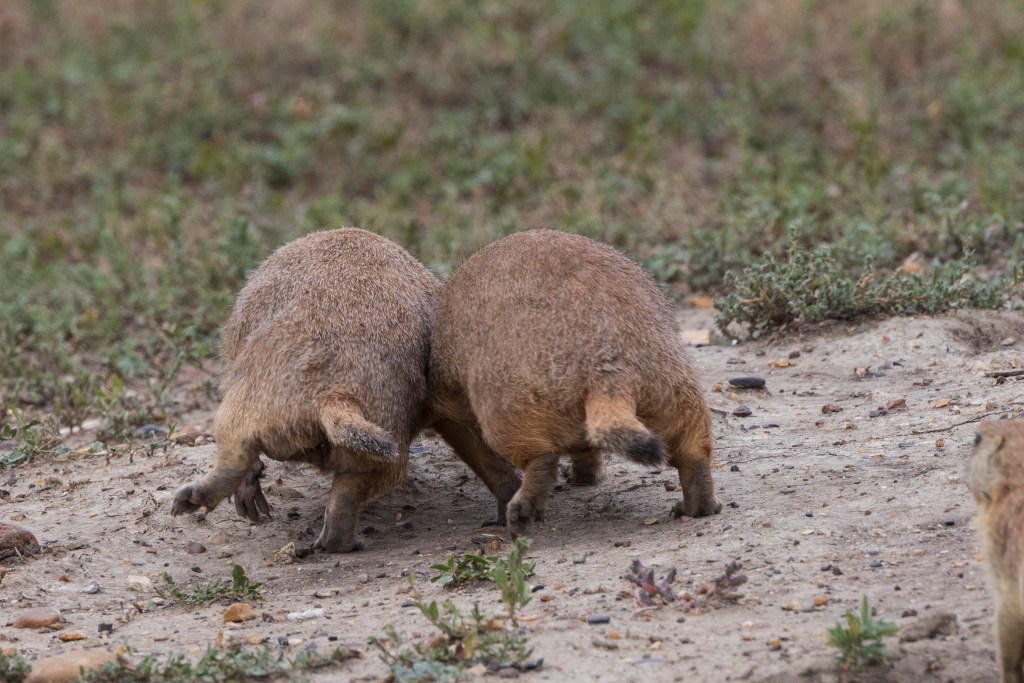
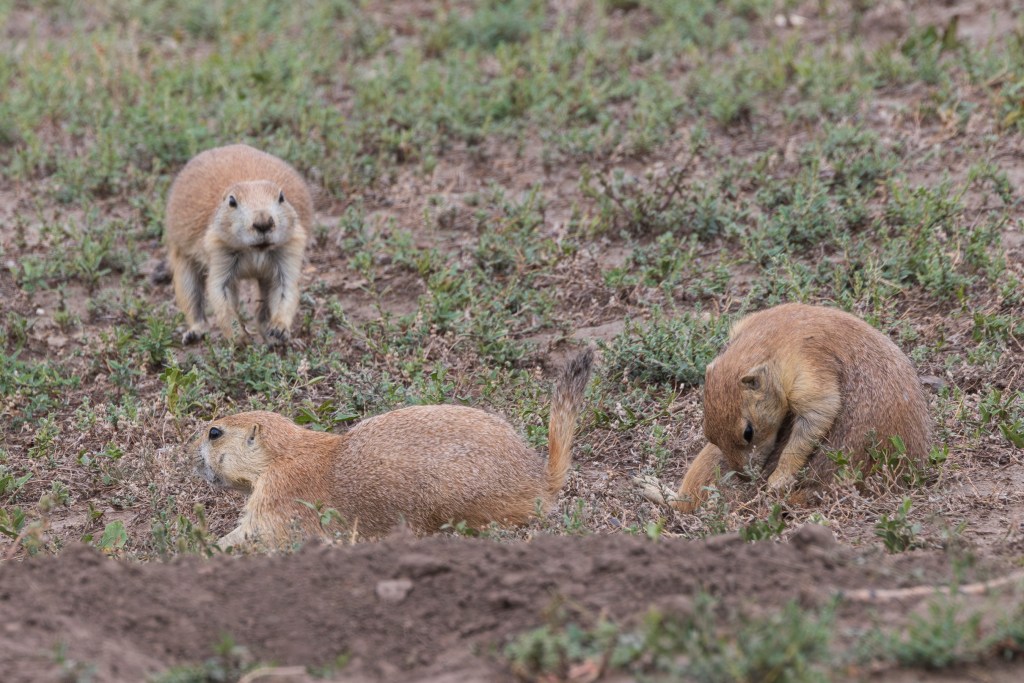
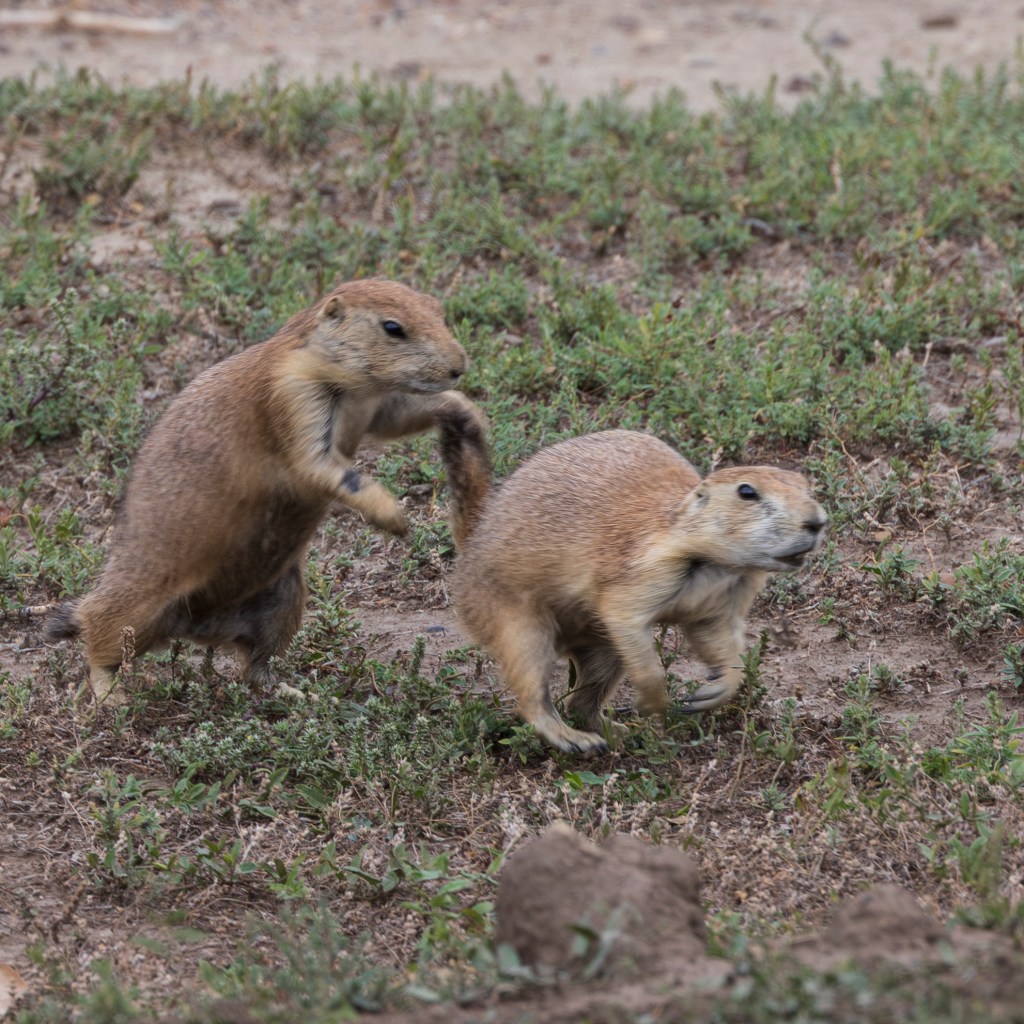
Sometimes you’d see a little chasing going on, ending in a roiling ball of fur before foraging resumed.

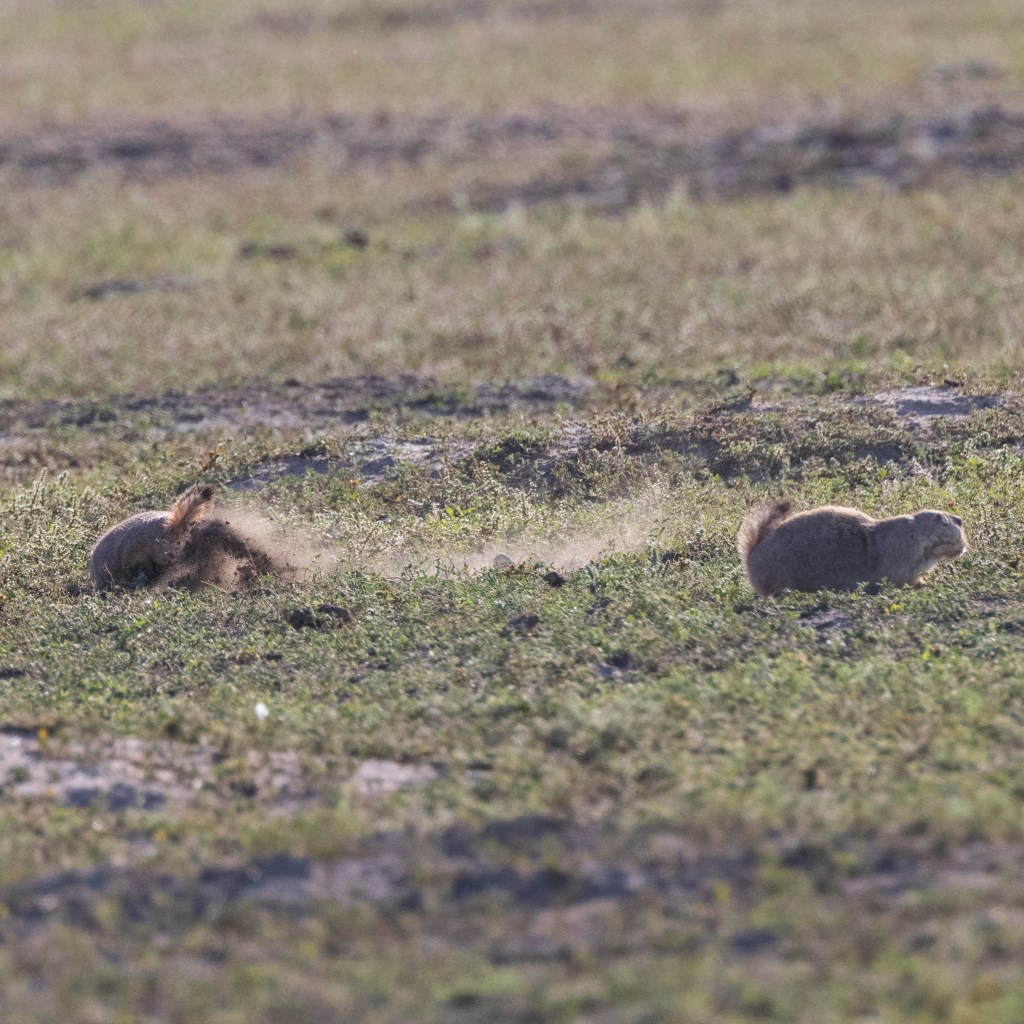
At one point I saw clouds of dust at the far side of the town. I got to use my telephoto like binoculars to see more of what was going on. To me, it looked like a dispute of some kind. One prairie dog turned his back on another dog, scooped dirt furiously with its front claws, and then used its strong hind quarters to ‘throw’ that dirt at the dog it had a beef with. Then it would spin around and, if it were a bear, I’d call it a bluff charge, run straight at the other prairie dog. The other dog held its ground. Rinse and repeat.

But I have to say that the biggest surprise was the interaction between individuals. To anthropomorphize, it was like watching extended families at a big get together. Cousins sneaking up on another and leaping on their back.


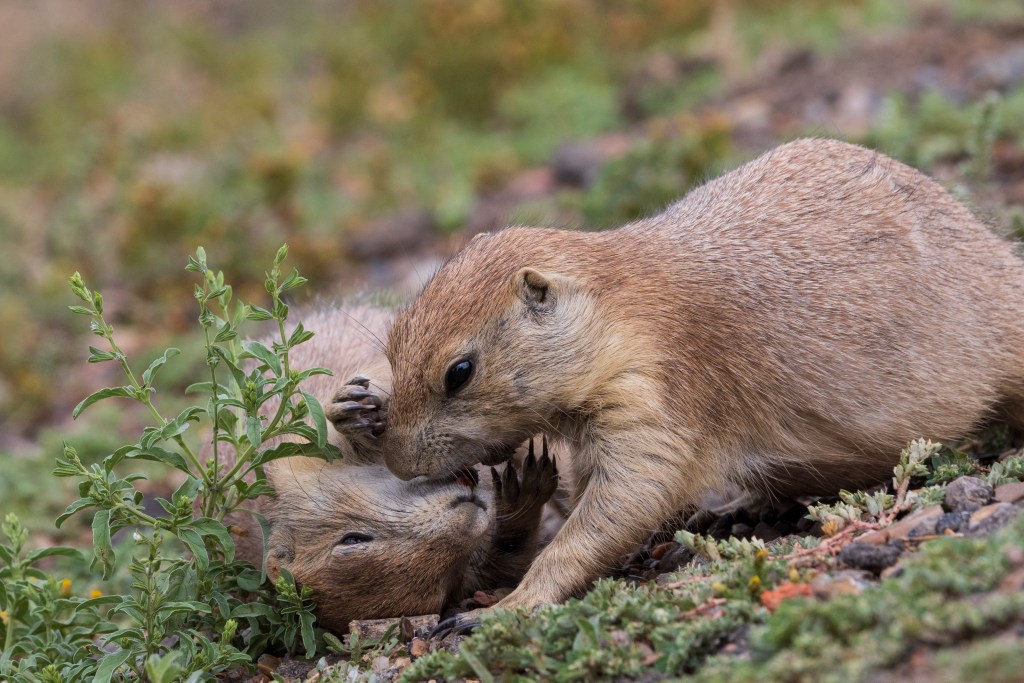

Young pups wanting acknowledgement, and being very stubborn and persistent in pursuit of cuddles and grooming. Eventually I could spot that behavior developing and get the camera ready — it made me go back a second day.
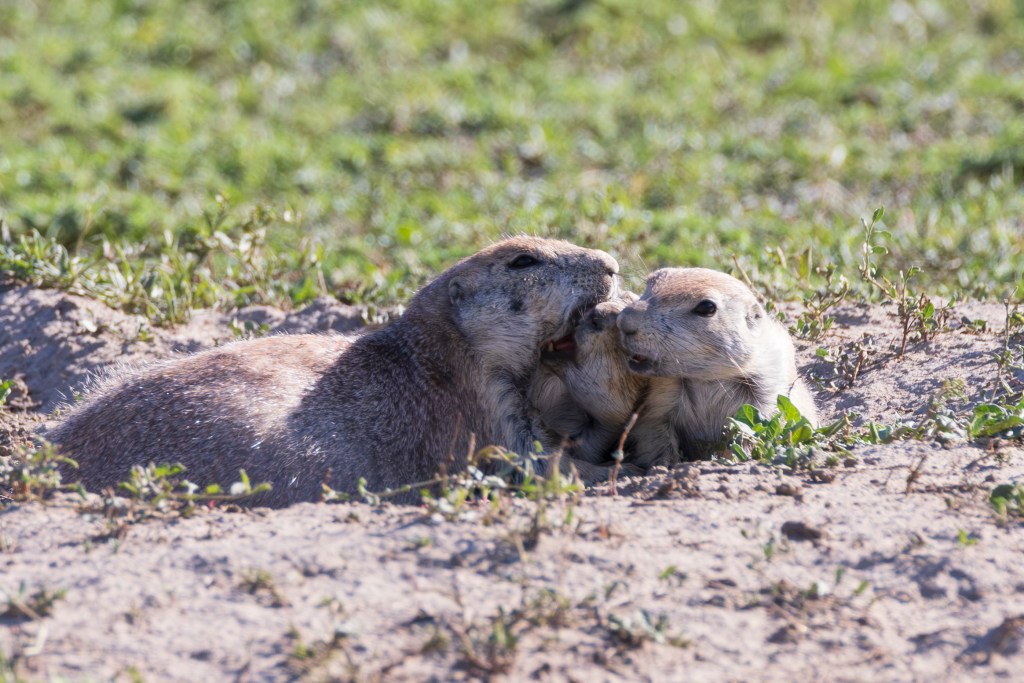

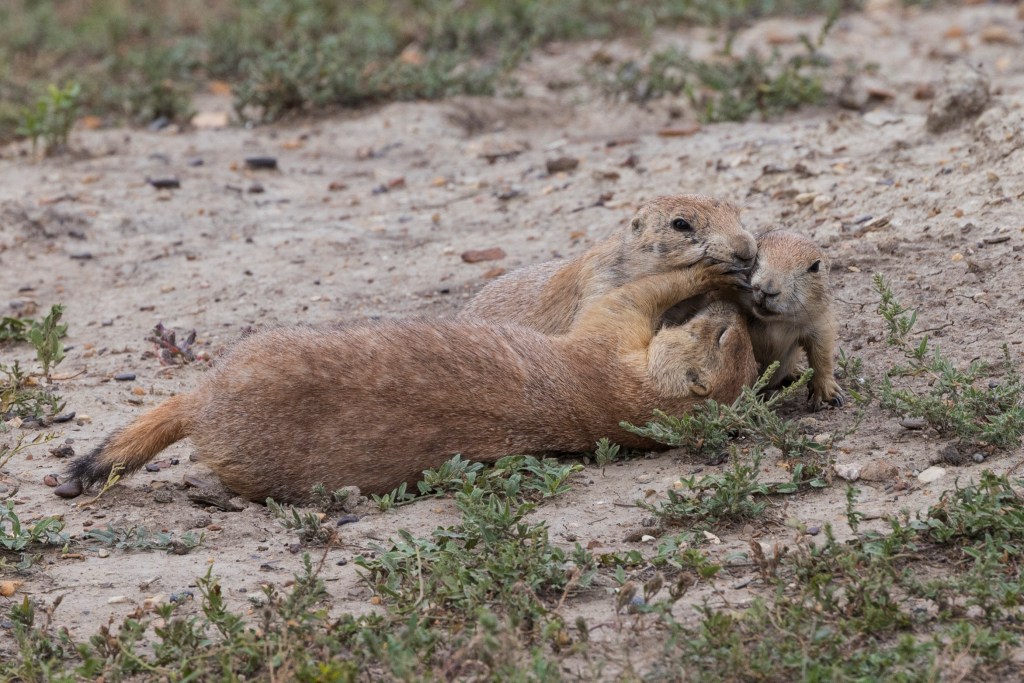
Grooming to strengthen bonds.


And of course, there were parents that just wanted to be left alone.
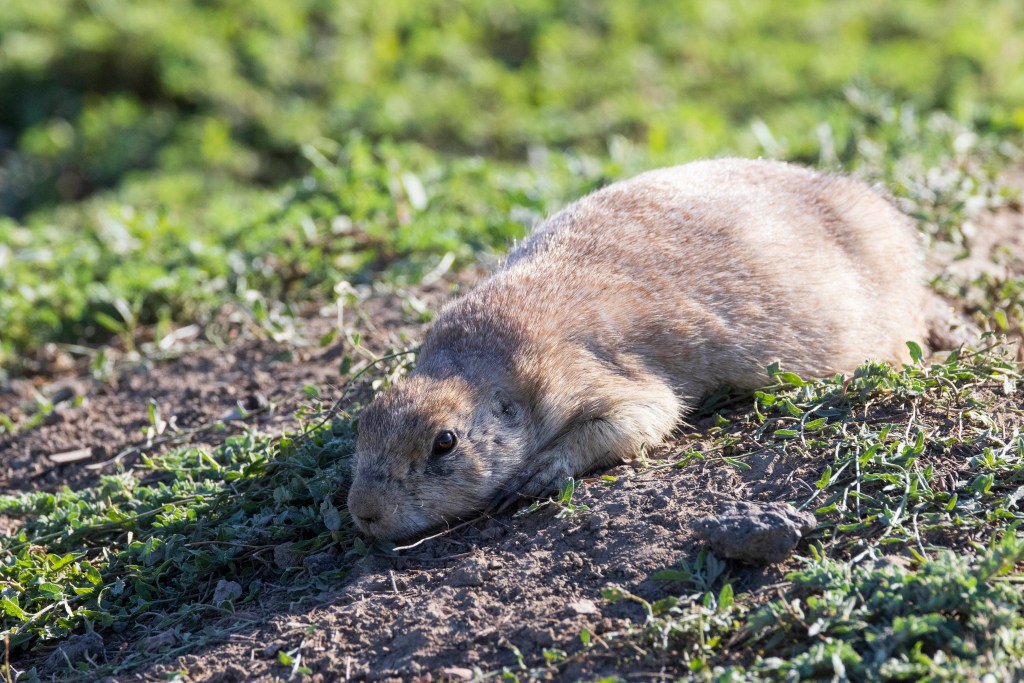
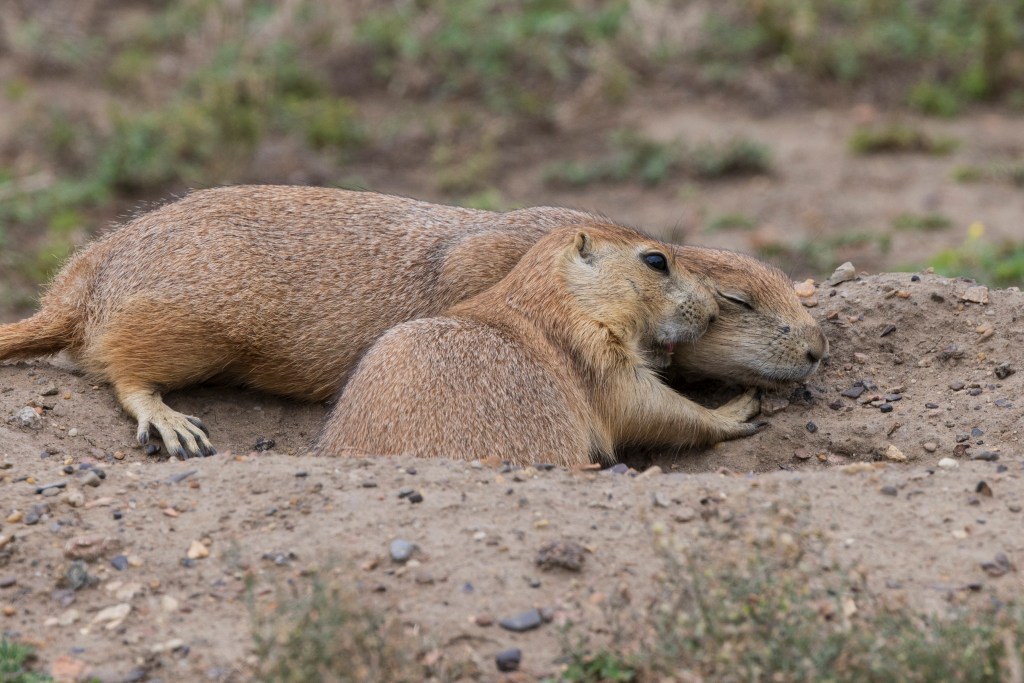
Really quite amusing.
My lens didn’t make the prairie dogs interesting. It made it easier for me to see what was already interesting.
Absolutely, the telephoto lens matters in my photography. It can let me fill the frame from a respectful (and safe) distance. I can see details that your eyes can’t, such as the scars on a prairie dog face. It lets me see more natural behavior without disrupting it, or, sending the animals running for their burrows.
And that’s exactly what I want from my photography. The lens helps me do the thing I enjoy: watch without interfering, and bring home a little bit of what I saw.
Dave on the other hand has a different relationship with time and cameras. He is very capable of making gorgeous photos using his DSLR camera and a tripod. On this trip, he got a beautiful photograph of canyon cliffs — using his smart phone.
Why was it so beautiful? He was outside at sunrise, to see if the sun would make it through the clouds and paint the canyon walls with alpenglow. That gorgeous early morning pink and gold light. The phone didn’t make a great picture. It just recorded what Dave had taken the time to notice and anticipate.

The important piece of equipment isn’t necessarily the one with the longest lens or the biggest sensor. Sometimes it’s the thing that gets you outside at the right moment.
As I was culling through the photos back in camp (even with a long lens, I have plenty of missed shots), I started wondering when I had made the shift. I used to go out with the plan to photograph a thing, a place, an event. (I still do!) But my favorite technique is to go out with the plan to just watch and see what happens.
Maybe that’s why those comments about my lens sometimes make me laugh. Yes, the lens helps. It lets me photograph things I shouldn’t—or couldn’t—get close to. It lets me see details my eyes can’t resolve from a respectful distance.
But the lens isn’t what made the photograph.
First I had to notice that something was happening.
Then I had to wait.
Then, if I was lucky, the camera was ready when the prairie dog did something interesting.
The best photography trick I know is sitting still.